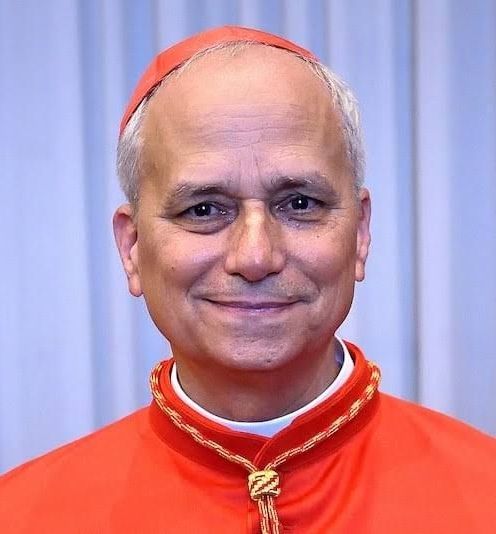
On May 8, 2025, Cardinal Robert Francis Prevost, a Chicago-born Augustinian prelate, was elected the 267th pope, taking the name Leo XIV. His election marks a historic moment, as he becomes the first American-born pope and the first Augustinian to lead the Catholic Church in centuries. Known for his pastoral approach, global experience, and commitment to synodality, Prevost’s journey from a working-class Chicago neighborhood to the Chair of St. Peter reflects a life shaped by faith, service, and cross-cultural ministry. This article explores his verifiable biography, focusing on his childhood, formation, and the path that led to his papacy.
Early Life and Childhood
Robert Francis Prevost was born on September 14, 1955, in Chicago, Illinois, to a devout Catholic family. His parents, of French and Italian descent, raised him and his siblings in a tight-knit, working-class neighborhood on Chicago’s South Side. The Prevost household was steeped in faith, with regular attendance at Mass and participation in parish activities at St. Mary of the Assumption Church. Young Robert was known for his quiet demeanor, intellectual curiosity, and early interest in service, volunteering as an altar server and assisting in community outreach programs. His family’s modest circumstances instilled a sense of humility and resilience, qualities that would define his later ministry. Prevost attended Catholic schools, where teachers noted his aptitude for languages and theology, as well as his knack for connecting with peers from diverse backgrounds.
Formation and Vocation
At 19, Prevost felt a call to religious life and joined the Order of St. Augustine in 1974, drawn to its emphasis on community, contemplation, and service to the poor. He entered the Augustinian novitiate in St. Louis, Missouri, where he underwent spiritual and intellectual formation. His novice master described him as “reflective yet approachable,” with a natural ability to listen and mediate disputes among his peers. Prevost professed his first vows in 1975 and pursued philosophical and theological studies at Villanova University, a leading Augustinian institution, earning a bachelor’s degree in philosophy in 1977.
He continued his formation at the Catholic Theological Union in Chicago, where he completed a Master of Divinity degree. During this period, Prevost’s exposure to liberation theology and social justice movements shaped his understanding of the Church’s role in addressing poverty and inequality. He was ordained a priest on June 19, 1982, at the age of 26, in a ceremony at his home parish in Chicago. His early assignments included teaching at an Augustinian high school and serving as a parish priest in Illinois, where he earned praise for his relatable homilies and dedication to youth ministry.
Missionary Work and Leadership in Peru
In 1987, Prevost was sent to Peru as part of the Augustinian mission in the Andes, a defining chapter in his formation. Stationed in the diocese of Chulucanas, he served rural communities grappling with poverty and political instability. He learned Spanish and Quechua to connect with indigenous parishioners, immersing himself in their culture and advocating for education and healthcare access. His fluency in multiple languages and ability to bridge cultural divides earned him respect among both locals and clergy.
Prevost’s leadership skills were recognized early. From 1999 to 2001, he served as provincial of the Augustinian Province of Our Lady of Good Counsel, overseeing missions in the U.S. and Peru. In 2001, he was elected prior general of the worldwide Augustinian order, a role he held until 2013. Based in Rome, he traveled extensively, strengthening Augustinian communities in Africa, Asia, and Latin America. His tenure was marked by efforts to modernize the order’s governance and promote interfaith dialogue, particularly with Muslim and indigenous groups.
In 2014, Pope Francis appointed Prevost as bishop of Chiclayo, Peru, where he served until 2023. As bishop, he prioritized pastoral outreach, establishing programs for youth and marginalized communities. However, his handling of clergy abuse allegations in the diocese drew mixed reactions. Some praised his efforts to implement transparent protocols, while others criticized him for allegedly shielding accused priests. These controversies remain a point of scrutiny in his otherwise lauded career.
Vatican Service and Path to the Papacy
In 2023, Pope Francis named Prevost prefect of the Dicastery for Bishops, a powerful Vatican role overseeing the selection of bishops worldwide. He also received the cardinal’s red hat in a consistory that year, cementing his status as a key figure in the Church. As prefect, Prevost worked to align episcopal appointments with Francis’ vision of a synodal, inclusive Church, emphasizing candidates with pastoral experience and openness to dialogue. His fluency in English, Spanish, Italian, and Quechua, combined with his dual U.S.-Peruvian citizenship, made him a unique bridge between the global North and South.
Following the death of Pope Francis, Prevost entered the 2025 conclave as a relatively low-profile cardinal but emerged as a compromise candidate. His election as Pope Leo XIV, at the age of 69, reflects the cardinals’ desire for a leader who could balance continuity with Francis’ reforms while addressing the Church’s internal divisions. The choice of the name Leo XIV evokes Pope Leo XIII (1878–1903), known for his social teachings and efforts to engage the modern world, signaling Prevost’s intent to prioritize social justice, synodality, and unity.
A Papacy Rooted in Formation
Pope Leo XIV’s childhood in Chicago and formation as an Augustinian have equipped him with a rare blend of humility, intellectual rigor, and global perspective. His early years in a diverse, working-class community fostered an empathy that carried into his missionary work in Peru and leadership in Rome. His Augustinian training, rooted in St. Augustine’s emphasis on community and grace, informs his vision of a Church that listens to its people and engages with the world’s challenges.
A Prayer for Pope Leo XIV
Let’s join in fervent prayer for our Holy Father, that he may be a beacon of hope and a faithful shepherd to all. Through Christ our Lord:
Heavenly Father, we lift up Your servant, Pope Leo XIV, as he assumes the mantle of leadership over Your Church. Grant him wisdom, courage, and compassion to guide Your people with humility and love. Assist him, Lord, to foster unity, justice, and dialogue in a divided world. Strengthen him to address the challenges of our time with grace, and let Your Holy Spirit guide his steps. Amen.


 Vox Divini