Role of the Clergy and Religious in Facilitating the Joy of Life and Love in Families (Part 2)

Consecrated persons’ call to be bearers of God’s love is expressed in effective family ministry. Anyone who has met the Lord and follows him faithfully is a messenger of the joy of the Spirit. The fruitfulness of one’s pastoral ministry proceeds from the realization that joy is not a useless ornament. It is a necessity, the foundation of human life. In their daily struggles, every man and woman tries to attain joy and abide in it with the totality of their being.

Role of the Clergy and Religious in Facilitating the Joy of Life and Love in Families (Part 1)

“The joy of love experienced by families is also the joy of the Church,” says Pope Francis as he begins the post-synodal apostolic exhortation Amoris Laetitia. The family is the basic cell of society and the fundamental ecclesial community, the Church that is the home.  As the Church is a ‘family of families’ the joy experienced among the members of a family reaches out also to the wider community of church as a whole.

Should beef be banned? From the Myth of Holy Cow

Most Hindus today are guided by a religious concern for cow protection. Therefore an average Indian, rooted in what appears to him as his traditional Hindu religious heritage, carries the load of the misconception that his ancestors, especially the Vedic Aryans, attached great importance to the cow on account of its inherent sacredness. The ‘sacred’ cow has come to be considered a symbol of community identity of the Hindus whose cultural tradition is often imagined as threatened by Muslims, who are thought of as beef eaters. The sanctity of the cow has, therefore, been announced with the flourish of trumpets and has been wrongly traced back to the Vedas, which are supposedly of divine origin and the fountainhead of all knowledge and wisdom. In other words, some sections of Indian society trace the concept of sacred cow to the very period when it was sacrificed and its flesh was eaten.

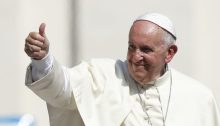
Ka jingkiew u Jisu shabneng (Matheus 28:16-20)

Ka Gospel ba mynta ka Sngi ka krenshaphang ka jingpawbakhatduh u Jisu ha la kisynran ha shuwa ba unkiewnohshabneng. Kumjuhruh ka pynishynna ha ngi ïa ka kamramkisynran u Jisu ban leitpynbna ïa ka KhuborBabha ha barohkijaitbynriew. Ka jingbthah u Jisu ïa la kisynran ban pynbna bad ban pynbaptis ka wan hi na ka borjong U…

From Banking System of Education to Problem solving Education

Education is the best defined as the nurture of personal growth. Over the years the pedagogy of education has been undergoing a revolutionary transformation. Paul Freire, a Brazil born educator captured the imagination of many with the concept of ‘problem posing education.’ Freire distinguished the conventional method of education which he called ‘banking system of education’ from problem posing education. This article draws a line between the two systems by showing the characteristic features that mark both the systems. In banking system education is seen as transmission of a body of knowledge from teacher to the students. It is a teacher-centered education in which the teacher is a depositor of knowledge into students who are passive receivers. Problem posing education, on the other hand, highlights the shared roles of both teachers as well as students.

Sweeping Principal

Don’t think that I am going to speak about a principal who sweeps the ground. I wish to introduce Fr Sabu the principal of Bosco B.Ed. College Dimapur who is fond of sweeping not ground but ranks. This year he brought the college to its heights with a magnificent result that comprised of all the…

Ka jingkular Ia u Mynsiem Bakhuid (Ioannis 14:15-21)

Ka Lynnong ba 14 jong ka Gospel u Ioannis ka kren shaphang ka jingpyntngen jong u Jisu ha ki synran jong u, hadien ka jingsngewsih sngewdiaw jong ki na ka daw ka khubor ba ki la iohsngew ia ka jingpynbna jong u shaphang ka jingleitnoh jong u. Kumta kum ka jingpyntngen ia ki, U la kular bad pynshai ha ki ba ka jingleit noh jong u kan wanrah jingmyntoi ia ki. Lyngba ka jingleit jong u, Un lah pat ban don bad ki kham jan shuh shuh hadien ka jingmihpat jong u.

U Jisu, ka lynti sha u Kpa ( Jn:14:1-14)

Don ar bynta ha kane ka phang jong ka subjek- U Jisu u pynkhreh jaka ha ing u Kpa jong u naka bynta ki synran ( 14: 1-4), bad dei tang u Jisu uba dei ka lynti sha u Kpa ( 14: 5-14). La iohi shai na ka jingkylli jong u Petrus haba  ki synran…

Word, Altar and People

One of the most inspiring homilies that I heard recently was preached by Rev. Fr George Maliekal, provincial of the Salesian province of Shillong. Listening to him enabled me to gain an insight into the essence of priesthood. It was this homily that led me into a conversation with him. I had a few questions.…

Revelation in Islam

Islam, at present, is one of the largest religions. The word ‘islam’ describes a relationship between man and God. “This relationship of submission (islam in Arabic) means that God is Lord of man, and man is the servant of God. The servant is dependent upon his Lord, and is obedient to him: and so the man who has accepted this submission, dependence and obedience is called ‘submitted to God’ (muslim).