Evil often enters our lives in subtle ways that we do not immediately notice. Just as a thief sneaks in through an unlocked door, demons look for gaps in our spiritual defenses. Their goal is to gain access and exert influence. Jesus warned us about this in Mt 12:43-45, where He describes how an evil spirit, after being cast out, wanders through “waterless places” seeking rest. Water, in Scripture, often symbolizes the Holy Spirit. A “waterless place” represents the absence of the Holy Spirit’s anointing and guidance.
This concept is further illuminated in Gen 3, where God punishes the serpent, declaring, “dust shall you eat.” Scripture reveals that God formed humanity from the dust of the earth and breathed into us the breath of life—His Spirit. Thus, humanity is a union of dust (physicality) and the divine breath (the Holy Spirit’s indwelling). Without this breath of God, humans are reduced to mere “dust,” vulnerable to being consumed by the enemy, just as the serpent was condemned to feed on dust. When we remain disconnected from the Holy Spirit’s life-giving presence, we risk becoming perpetual targets of the enemy’s schemes, easily ensnared by his tricks and designs.
At times, when a person is prayed over, an evil spirit may leave them, but it can later return if the individual remains spiritually empty, leaving room for the demon gates to remain open. As Jesus noted in Mt 12:43-45, the spirit may return to find the person’s life “empty, swept clean, and put in order” but lacking the Holy Spirit’s presence, making it easy for the spirit to re-enter with worse spirits. While prayer and deliverance can provide temporary relief, the evil can easily return if any of these entry points or the DEMON GATES, are left open. Therefore, ministers must guide those in need to understand these areas of vulnerability, encouraging a thorough examination of conscience and decisive actions to close and seal these gates, ensuring they are filled with the Holy Spirit to prevent further demonic access.
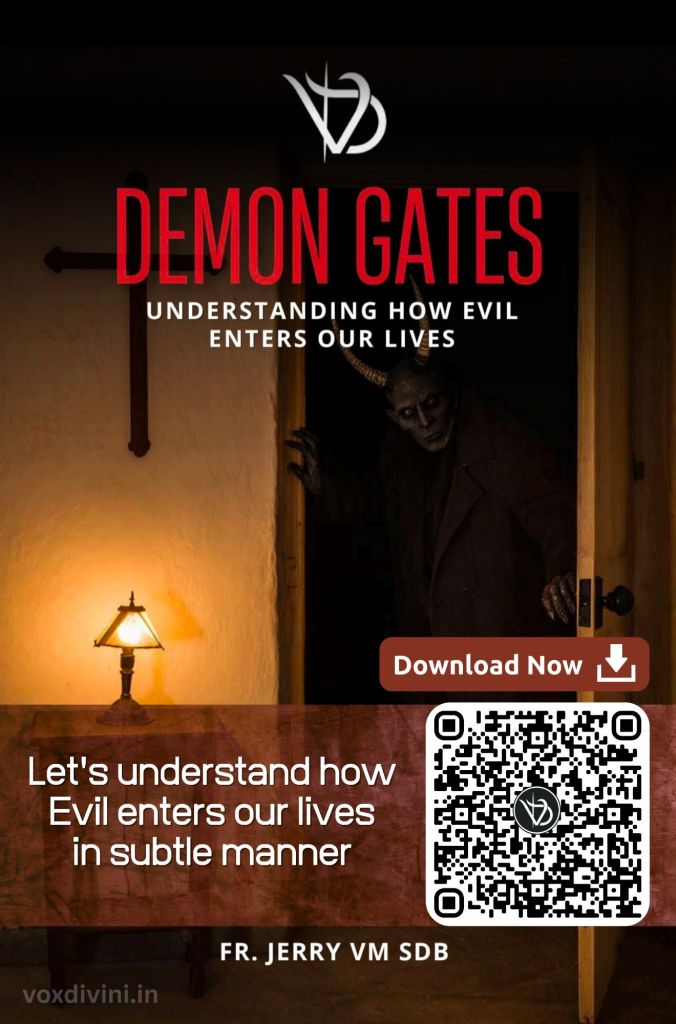
When we lose this divine protection, even temporarily, it becomes easier for evil to find a foothold in our lives. Understanding the various ways we can lose our spiritual covering is crucial to guarding ourselves against demonic influence. Below, we explore these entry points, or DEMON GATES, and how they can subtly open the door to evil.
D – Disobedience to God’s Will
Disobedience is one of the most common ways evil gains access to our lives. When we place our own will above God’s, we align ourselves with rebellion—the very essence of sin. St. Augustine, in his Confessions, reflects on how his disobedience led him into years of spiritual darkness, showing that even seemingly small acts of defiance can have lasting consequences. The Catechism of the Catholic Church (CCC 1850) teaches that sin is fundamentally a rejection of God’s will. It is an act of disobedience that turns our hearts away from Him. Scripture provides a clear warning in the example of Judas, whose unchecked greed and dishonesty led to Satan entering him (John 13:27). The Church also emphasizes the importance of obedience through the teachings of Lumen Gentium (LG 37). It calls the faithful to submit humbly to legitimate authority. This is a reflection of our obedience to Christ. By striving to obey God’s commandments, even when it is difficult, we close the door to evil and remain in the protection of His grace.
E – Exposure to Unholy Things
Exposure to unholy things—such as pornography, horror movies, or dark music—can open the door to demonic influence. These things dull our conscience and make sin seem normal, creating a space where evil can take root. The devil often uses entertainment to plant small temptations that grow over time. St. Alphonsus Liguori warned that engaging with anything against our faith weakens our relationship with God. The Catechism of the Catholic Church (CCC 2339) teaches that we must practice self-control and avoid things that lead us into sin. Gaudium et Spes (GS 19) also warns that when people ignore God, they fall into moral confusion. Protecting our eyes, ears, and minds from harmful influences helps us stay strong in faith and close to God.
M – Malice and Unforgiveness
Holding onto anger, bitterness, or unforgiveness gives evil a place in our hearts. Sirach 28:2-3 warns, “Forgive your neighbour the wrong done to you; then when you pray, your own sins will be forgiven. Does anyone nourish anger against another and expect healing from the Lord?” Unforgiveness blocks God’s grace and allows the devil to disturb our peace. St. John Vianney warned that an unforgiving heart leads to spiritual harm, urging people to let go of grudges and forgive as Christ forgave us. The Catechism of the Catholic Church (CCC 2840) teaches that we cannot receive God’s mercy if we refuse to forgive others. Dives in Misericordia (DM 14) also reminds us that forgiveness is essential for healing and peace. Choosing to forgive frees us from spiritual bondage and keeps us close to God.
O – Occult Practices and Associations
The occult is a direct and dangerous way for evil to enter our lives. Practices like witchcraft, Ouija boards, charms, divination, and consulting mediums separate us from God and invite demonic influence. Fr. Gabriele Amorth, a well-known exorcist, warned that many cases of spiritual bondage began with involvement in the occult. The Church strictly forbids such practices because they seek power apart from God and open the soul to harm. The Catechism of the Catholic Church (CCC 2116-2117) clearly states that divination, magic, and calling on spirits are grave sins, as they contradict trust in God. Even seemingly harmless things, like playing with a Ouija board or reading horoscopes, can lead to serious spiritual danger. The safest path is to reject all forms of the occult and remain faithful to God alone.
N – Neglect of Prayer and Sacraments
Neglecting prayer and the sacraments leaves us spiritually unprotected. St. Teresa of Avila compared a soul without prayer to a castle without walls, open to attack. The sacraments, especially the Eucharist and Reconciliation, are powerful sources of grace that strengthen us against evil. The Catechism of the Catholic Church (CCC 2744) teaches that prayer is necessary for our spiritual life, and CCC 1395 explains that the Eucharist preserves us from future mortal sins and strengthens our union with Christ. St. John Bosco often said that the devil fears hearts filled with prayer. When we stop praying or receiving the sacraments, we weaken our defenses and become more vulnerable to temptation. Staying close to God through daily prayer and frequent reception of the sacraments keeps us strong in faith and safe from spiritual harm.
G – Generational Sins and Curses
Generational sins can create patterns of behavior that make families more vulnerable to evil. These can appear as recurring struggles, such as addictions, broken relationships, or spiritual difficulties. Fr. Gabriele Amorth stressed the need to renounce these sins and seek healing through prayer and the sacraments. The Catechism of the Catholic Church (CCC 1869) teaches that sin can have lasting effects on others, influencing future generations. However, through repentance, God’s mercy, and a life of holiness, these patterns can be broken. Frequent confession, receiving the Eucharist, and offering prayers for family members help bring spiritual healing and protection. Trusting in God’s grace is the key to overcoming any negative influence from the past.
A – Addiction and Vice
Addictions enslave us, making us more vulnerable to evil by weakening our will and distancing us from God’s grace. Whether it’s substance abuse, pornography, or other vices, addiction erodes our freedom to choose what is good, as the Catechism of the Catholic Church (CCC 1733) explains: the more we yield to sin, the harder it becomes to pursue virtue. Yet, God’s mercy remains ever-present. St. Mark Ji Tianxiang, a Chinese martyr and patron saint of addicts, struggled with opium addiction for years but held fast to his faith, showing that even in our weakness, God’s grace can sustain us. Overcoming addiction demands humility, prayer, and often professional help, alongside significant effort, discipline, and determination. The journey can be arduous, and setbacks may occur, but we must not lose heart or give up if progress is slower than desired. Perseverance is key, as each step forward, no matter how small, draws us closer to freedom. The Church encourages those struggling to seek healing through the sacraments, spiritual support, and necessary treatment, trusting that God’s grace can lead to true liberation.
T – Traumatic Experiences
I once encountered a girl who needed deliverance, and during our conversations, the evil spirit within her spoke through her, saying, “I made her cry daily.” It became clear that her inability to move on from a past traumatic experience had given the enemy a foothold in her life. Trauma, especially from abuse or deep emotional wounds, can leave a person vulnerable to spiritual attacks. When someone is harmed—whether physically, emotionally, or sexually—it can create deep pain that the evil one manipulates, filling the heart with fear, anger, or despair.
Fr. Gabriele Amorth often saw cases where unresolved trauma led to spiritual bondage. The Catechism of the Catholic Church (CCC 1503) reminds us that Christ came to heal the brokenhearted and comfort those who suffer. True healing requires not only professional help but also spiritual restoration through prayer, the sacraments, and deliverance. Frequent Confession and the Eucharist bring God’s grace and protection, helping to close the door to any demonic influence. Only by surrendering our wounds to Christ can we break free and find lasting peace.
E – Evil Charms and Curses
Charms, curses, and superstitious practices directed toward us can affect us if our spiritual life is weak. When we lack a deep foundation in prayer and the sacraments, we become more vulnerable to these spiritual attacks. Curses, often rooted in malice or occult practices, are intentional invocations of harm that can exploit our spiritual weaknesses, unsettling our peace and sowing fear or confusion. St. Alphonsus Liguori cautioned that such practices frequently have hidden ties to the occult, and without God’s protection, they can disrupt our spiritual and emotional well-being.
The Catechism of the Catholic Church (CCC 2111) teaches that superstition is a false form of devotion that diverts us from trusting in God, leading us to place faith in ineffective or harmful rituals. True security comes only from a vibrant relationship with God. By strengthening our spiritual life through consistent prayer, frequent confession, the Eucharist, and a steadfast faith in Christ, we build a shield against any harmful intentions or curses, rendering them powerless in the face of God’s grace.
S – Sin and Moral Failure
Sin is the primary entry point for evil, but it is unrepented sin that poses the greatest danger to the soul. Even small sins, if left unchecked, can gradually lead us away from God and weaken our spiritual defenses. St. Faustina Kowalska, in her Diary, emphasizes the importance of frequent confession and repentance, warning that sin darkens the soul and makes us vulnerable to the devil’s influence. The Church teaches that a well-formed conscience and regular examination of our actions are necessary to recognize and reject sin before it takes root.
The Church encourages frequent confession, even for venial sins (CCC 1458). This practice helps us grow in virtue. It also helps us resist future temptations. While we should strive to avoid every sin, no matter how small, if we do fall, we must promptly turn back to God through sincere contrition and sacramental confession. By making regular examinations of conscience, we prevent ourselves from remaining in sin for a prolonged period. Receiving the grace of the sacraments ensures that we remain in God’s grace and are safeguarded against spiritual harm.
Conclusion
The DEMON GATES acronym provides a clear framework for understanding how evil can enter our lives. We can resist the devil by addressing these entry points through prayer. We need to embrace the sacraments and live a life of virtue to remain close to God. As the Catechism of the Catholic Church states: “The whole of man’s history has been the story of dour combat with the powers of evil, stretching, so our Lord tells us, from the very dawn of history until the last day” (CCC 409). Moreover, the Church reminds us of the reality of spiritual battle: “The devil and the other demons were indeed created naturally good by God, but they became evil by their own doing” (CCC 391).
The sacraments, especially the Eucharist and Confession, strengthen us against temptation:
“The Eucharist is ‘the source and summit of the Christian life’… it unites us with the heavenly liturgy and anticipates eternal life” (CCC 1324, 1326). “Through the sacraments of Christian initiation, man receives the new life of Christ. Now we carry this life ‘in earthen vessels’ and it remains ‘hidden with Christ in God’” (CCC 1420).
We need to protect ourselves constantly, as St. Paul says, “Put on the full armor of God, so that you can take your stand against the devil’s schemes” (Ephesians 6:11).


 Vox Divini
Amen ! 🔥🤍✝️🌿🕊️
LikeLiked by 1 person
LikeLiked by 1 person
Pingback: The Stages of Demonic Influence: A Catholic Perspective | Vox Divini